
Context Windows
Surprise is not always delight

Over time teachers develop a “spider sense,” an intuition that tells them when a learning moment is possible. (At least this is how a teacher who read a lot of comic books growing up would put it.) My spider sense led me to do this with seven course readers on Tuesday:
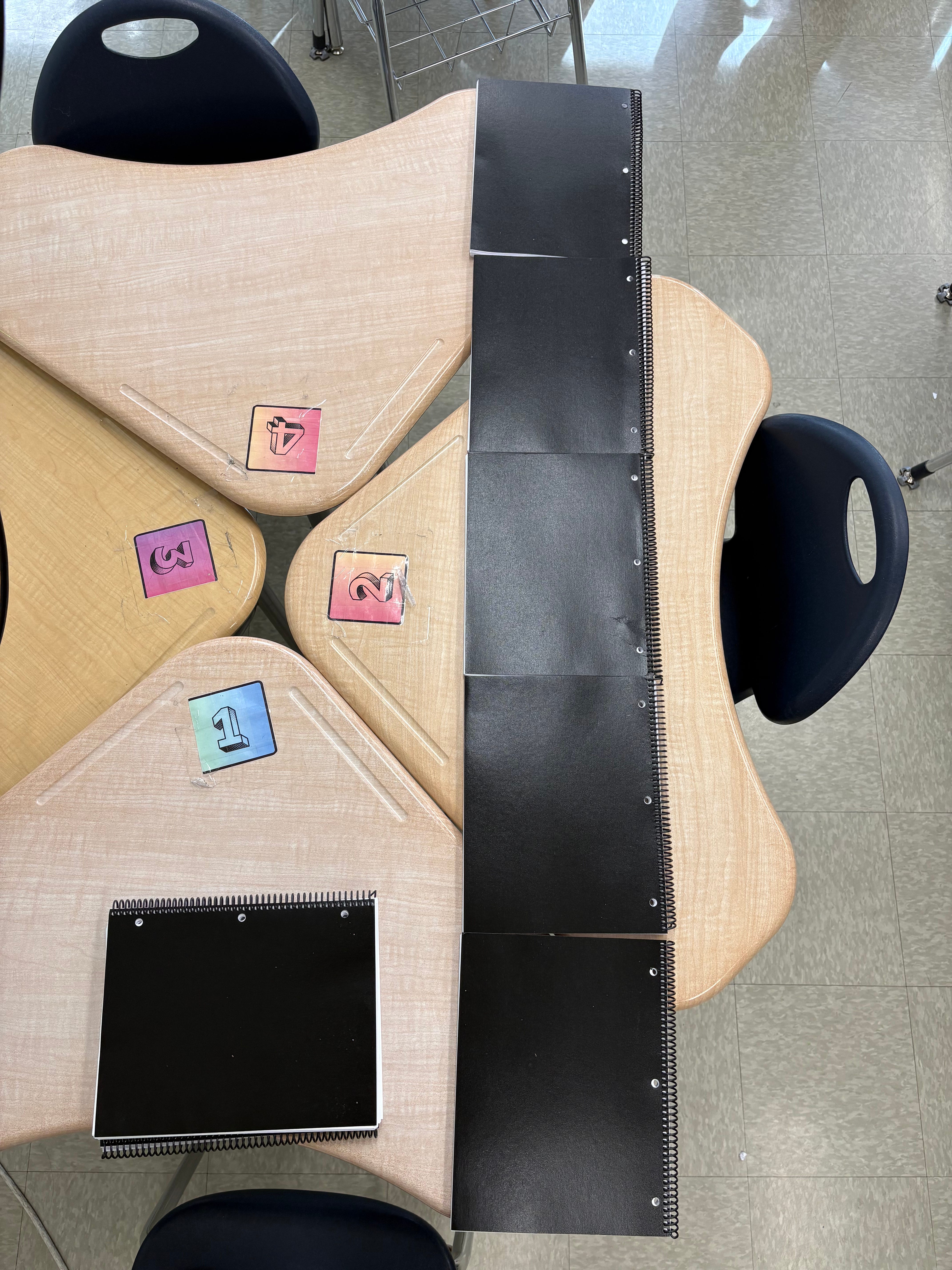
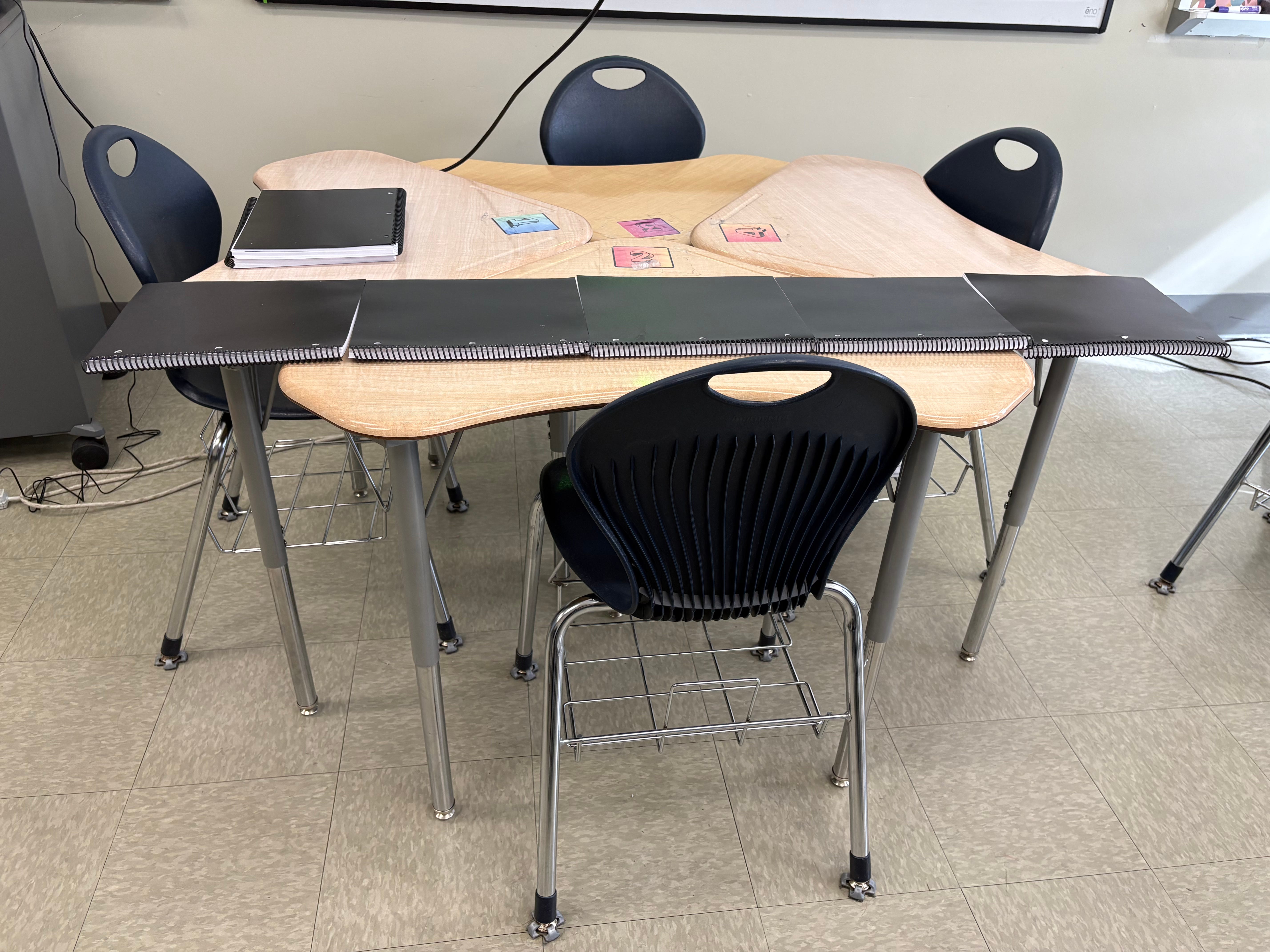
The course readers were for a History class at my high school, but the context here was the AI Literacy course I’ve been piloting this semester alongside Scott Kern.
We opened Tuesday’s class by discussing the concept of AI context windows. We first showed a couple of visuals via slides we created with NotebookLM. However, as we were about to move from theory to practice and have students consider context windows during their own AI use in class, my spider sense went off.
It was the last period of the day, and the students in the class are all second-semester seniors. They were as focused and thoughtful as always, but they were also tired. I could sense that a live, physical demonstration of the context window concept might be helpful on several levels.
We teach this class in a History classroom, so I looked around quickly and found a stack of extra History course readers. I went to the front of the room, knelt by the desks in the picture above, and put one of the course readers down, saying:
“Let’s pretend this is my first prompt, designing our class today. I might tell the AI, ‘I work with seniors in an AI Literacy class. You’re helping me design it.'"
I then put down four more course readers, sliding the first one toward the right of those desks as I added each new “prompt”. These prompts included statements like this:
“Students are working on long-term projects supported by AI that solve a problem in their personal life or our society.”
“Now I’m uploading all the slides and lesson plans for our course so far.”
And so on. When I got to the 6th prompt, I added the course reader slowly to the left until the original reader/prompt fell off the desks onto the floor on the right. I then said,
“And now the AI just forgot that you’re seniors.
That’s the problem with a context window that gets too long. The AI starts to forget, get confused, and/or hallucinate.”
There was just enough audible reaction from the aforementioned second-semester seniors to let me know the demonstration landed, at least for some.
Python Windows
A few minutes later in that same period, I sat next to Jessie to see how her project was going. (As in all my posts, I’m using a pseudonym here.) She’s been working on a website to teach high school students about coding. Her favorite section of the website design has been the smaller python-based activities she has designed. One was a calculator program that looked something like this example online:
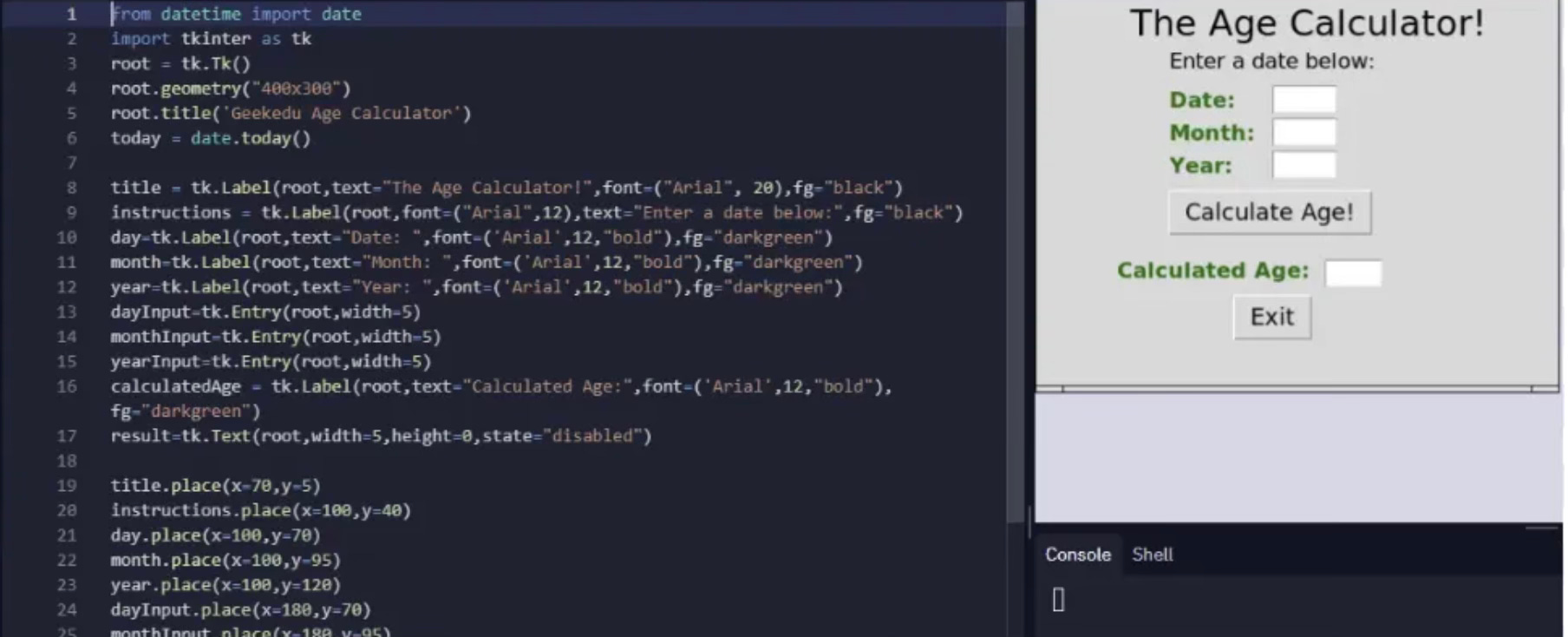
Jessie had written all the code on the left, and was excited to show off how it created the calculator on the right. She was even more visibly delighted to show another example, where she had used Python in the window on the left to write out her initials in the window on the right.
To help her get started on her broader website, and to help her start learning how coders will be collaborating with AI as she enters the college and career pathways to come, I pulled up Claude Code on my laptop.
I then took a photo of Jessie’s handwritten sitemap, which she had shown the class a few minutes before as part of the short “project showcase” activity we try to do regularly. I uploaded the photo to Claude Code with this prompt:
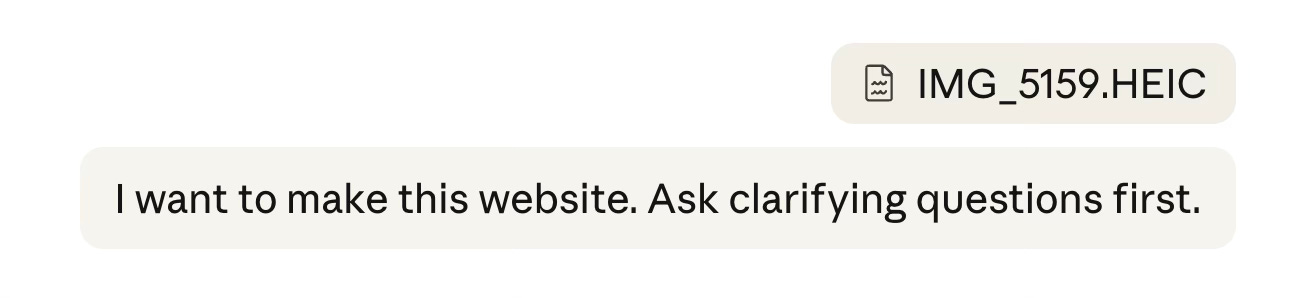
It responded:
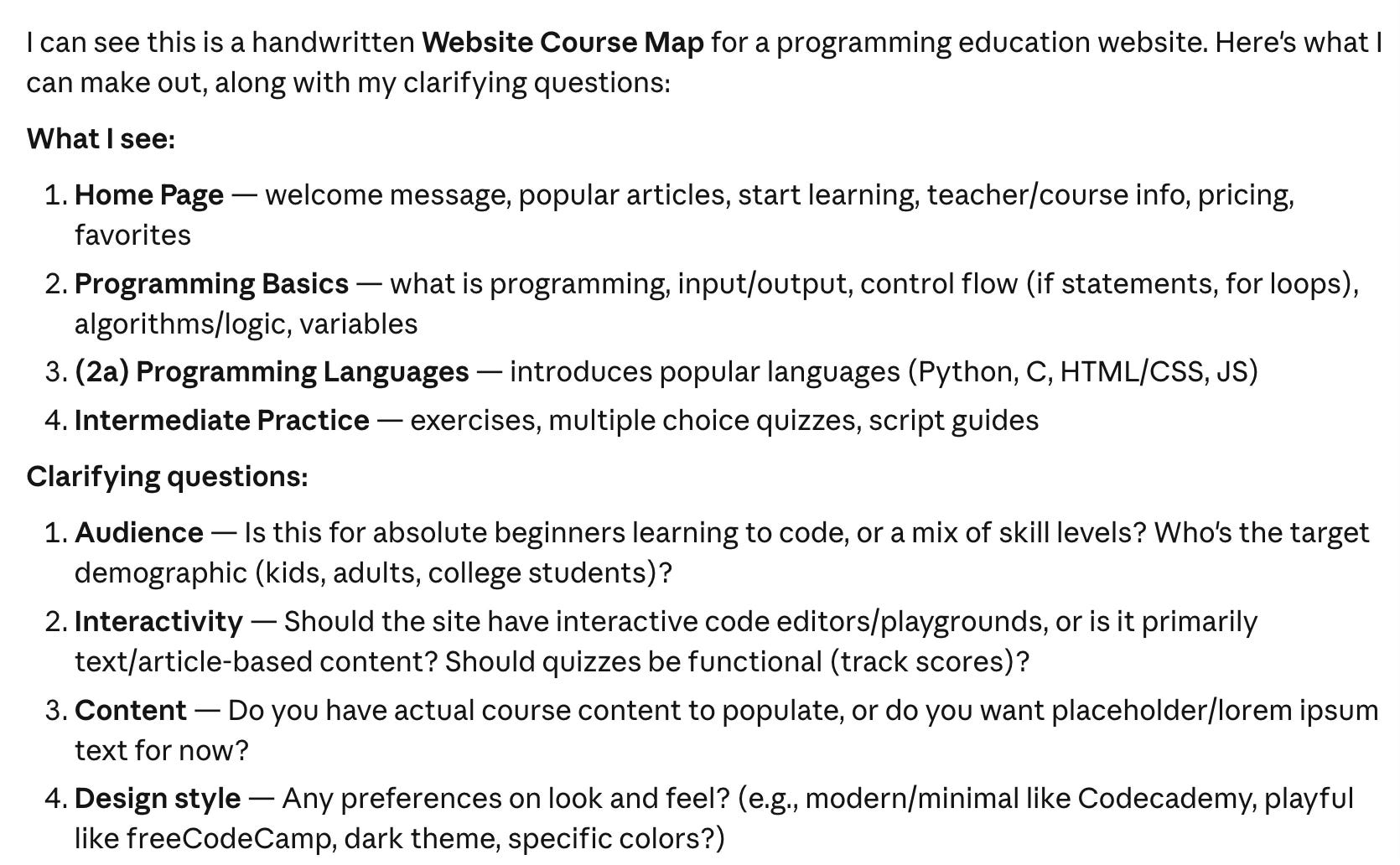
I then turned my laptop over to Jessie, who answered those questions and others it also asked.
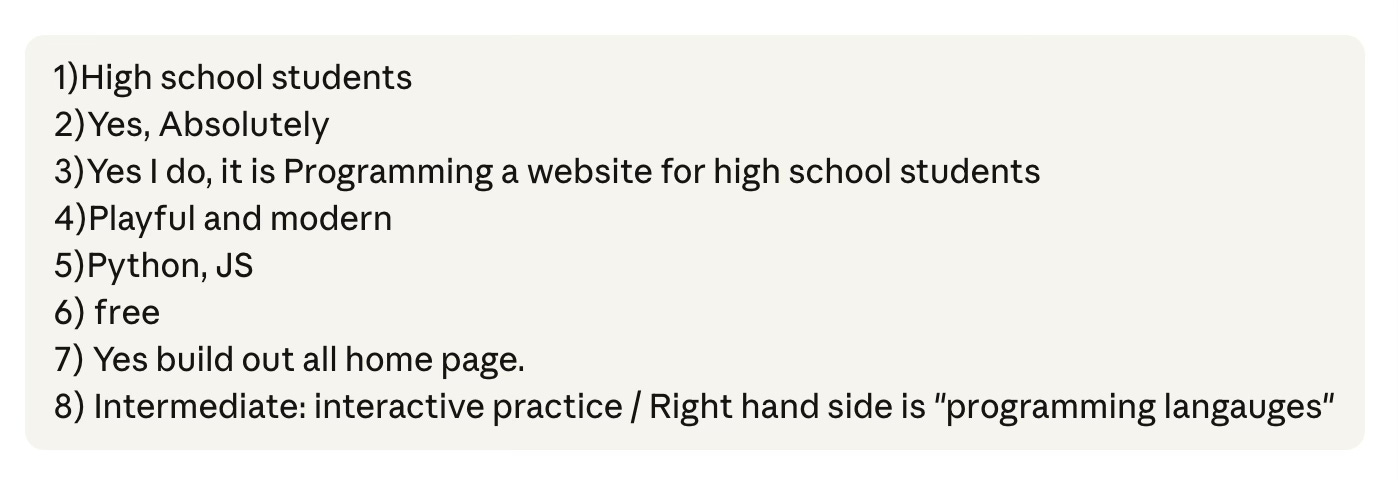
Claude then got to work, creating this site a few minutes later.
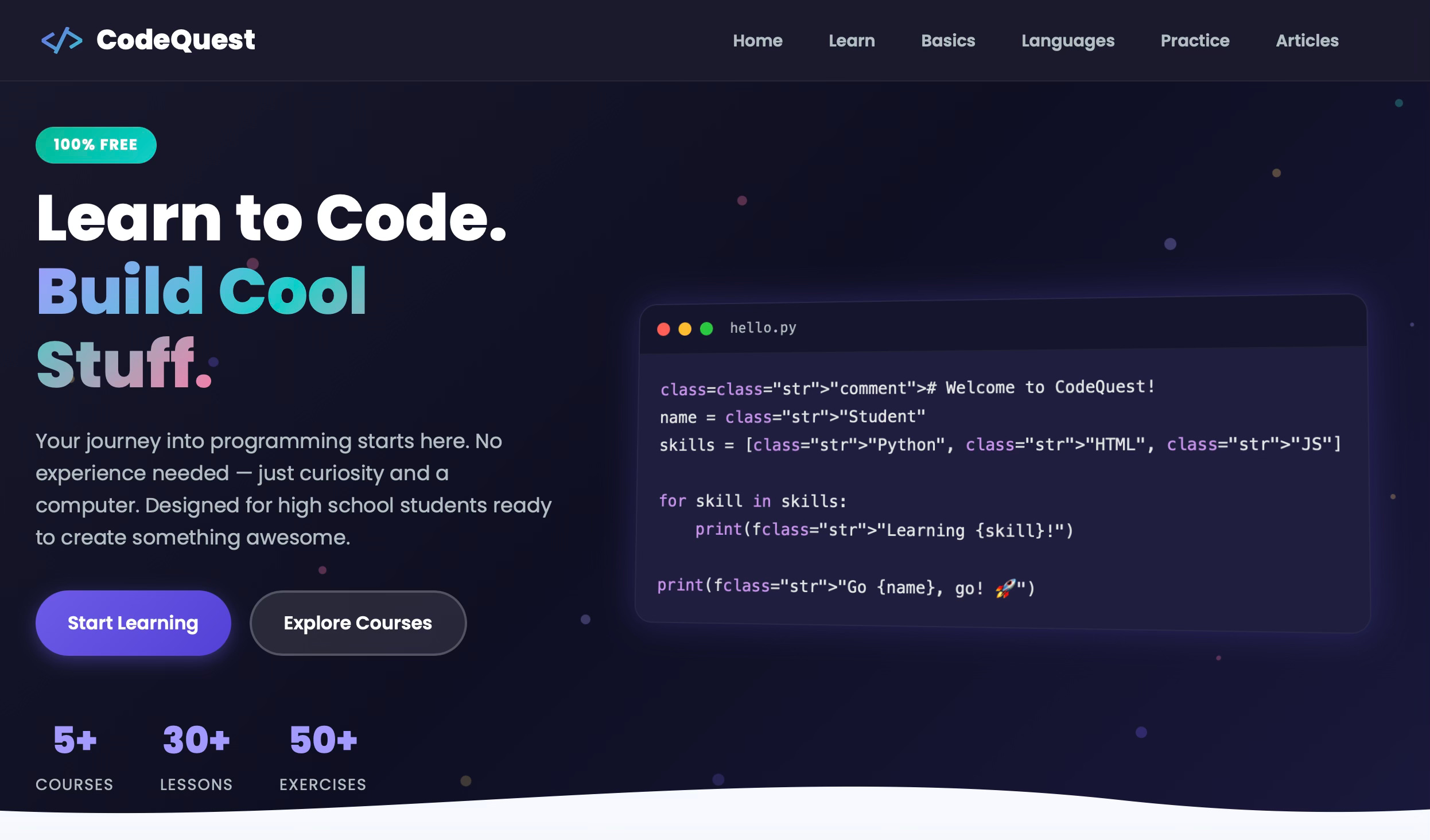
I then showed Jessie how we could host the site for free on Netlify using my account. (To tour the full live site, click here.)
Jessie was impressed, especially by how the AI incorporated all her ideas from her handwritten sitemap. But impressed is not delighted.
She offered a very polite “Wow, that’s nice,” which felt like a mixture of actual surprise about AI’s coding capacity and an earnest desire to make her teacher feel like what he just showed her was interesting.
But I could feel the difference between Jessie’s reaction to the entire website AI spun up for her and the way she felt about the python coding she had done to draw her initials. The former happened in a few minutes based on her input but not her effort, and resulted in surprise and appreciation. The latter was about input and effort, which led to pride, delight, and satisfaction. For Jessie, and probably for other students, that context makes all the difference.
Context Windows as Russian Dolls
Those two moments in class got me thinking about the concept of a context window more broadly, as a way of contextualizing AI in education itself. The image that came to mind was Matryoshka dolls, which nest inside each other:

That context window demo with the course readers was only possible because of a broader context. I was sitting in a classroom with students, getting lots of conscious and unconscious inputs about the state of their engagement and learning.
But that period in that classroom was part of a broader context. I’ve been working with many of those students in my purpose-development and career-exploration program all year, so I know their “tells” for when they are actually interested as opposed to politely attentive. I’ve also been working with seniors for the last decade-plus of my teaching career, so I have an ingrained sense of what mid-March means. And of course, more narrowly, Scott and I have been debriefing every AI Literacy lesson so far and all those conversations are in the back of my mind too.
That context window demo sat within larger, nested contexts. So did that moment with Jessie.
Jessie came to the US about a year ago, but has been eagerly pursuing coding-related work since well before that. When she first walked into our AI Literacy course this semester, she asked “Will we get to code in this class?”
Despite her humble and polite demeanor, Jessie’s ambitions are large. She is passionate about helping other students learn to code, in both her home country and her adopted one. Her eyes light up when she talks about it. As a result, she’s spent years learning about coding and writing her own, and she will clearly spend years to come doing the same. The time she’ll spend, the impact she’ll have, and the pride she’ll feel, are all sizable.
AI exists inside Jessie’s context. She needs to learn how to use it of course, and how to orchestrate the AI agents like Claude Code that are busy proliferating off-stage as she finishes up high school. But that’s different than saying (as I myself often have) that Jessie is graduating “into the AI era.”
That concept is directionally correct, in the sense that students are always graduating into a larger world. But the world they’re graduating into is already one that can make them feel small. The last thing educators need to do right now is make students feel like they are the tiny Russian doll on the right, that they need to shrink themselves to fit inside much larger institutions, forces and people.
If we want students to have voice and agency, we need to help them (and ourselves) remember that their dreams and hopes and futures are larger than any AI context window — let alone any classroom — can hold. AI will likely be a central feature of their adult lives, but their lives are its context, not the other way around.
Always love to hear your reflections and learning from the classroom, Mike. I especially appreciate this post in how we think about centering the possibility of what our students can do, not just thinking about how to fit into what's out there.